
How SEO Agencies Can Close Clients Faster Without Spending Hours Revising Quotes
Most SEO agencies don't lose deals because they don't know SEO.
They lose momentum during sales.
It usually starts with a discovery call.
"We're looking to target around 50 keywords."
You build a custom quote.
A day later, the prospect replies:
"What if we target 100 keywords instead?"
You update the spreadsheet and send another proposal.
Then comes:
"Can we do 6 months instead of 12?"
Another revision.
"What if we remove link building and increase content?"
Another revision.
None of these questions are difficult to answer. Your spreadsheet probably has the answers already. What's expensive is everything around it—the back and forth, the follow-ups, and the days lost waiting for pricing revisions.
By the time you've sent three versions of the same proposal, the conversation has slowed down and the prospect has moved on to ten other priorities.
The Hidden Cost of Custom SEO Quotes
Most agencies have a sales process that looks something like this:
- Discovery call
- Understand requirements
- Build a custom quote
- Send a PDF proposal
- Revise pricing
- Follow up with the prospect
- Revise the proposal again
- Schedule another call
- Finally discuss the actual SEO strategy
Now imagine doing this twenty or thirty times every month.
Your team isn't spending time selling SEO. They're spending time moving numbers around spreadsheets.
Your Prospects Don't Want Another PDF
Most prospects don't know exactly what they need when they first reach out.
They want answers to questions like:
- How much would 100 keywords cost?
- What happens if we increase content production?
- Is six months enough or should we plan for twelve?
- What's the difference between local SEO and a full campaign?
- Which package fits our budget?
Today, those questions usually become emails.
They don't have to.
Imagine two different experiences for your prospect.
Before: Custom Quotes and Endless Revisions
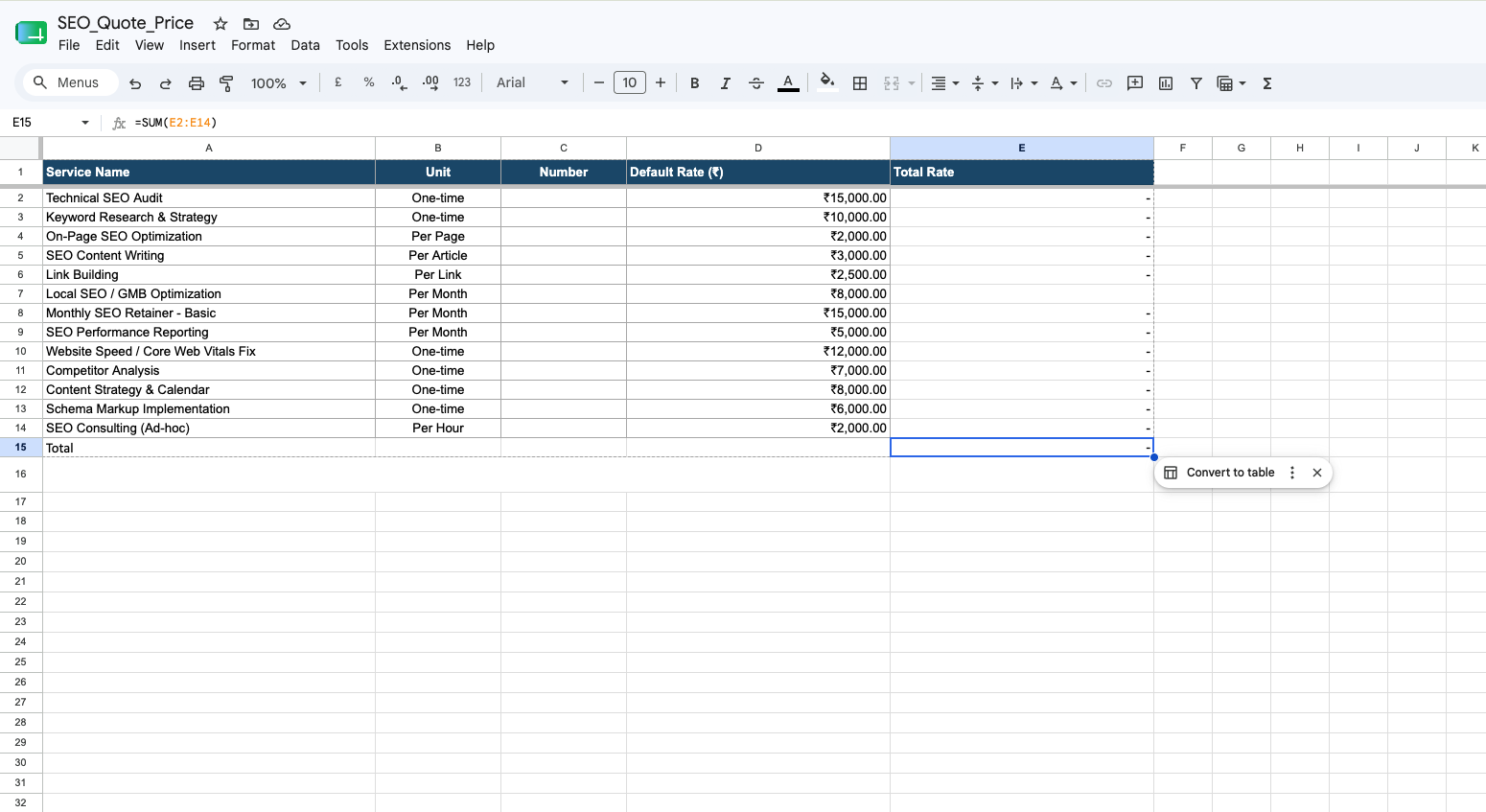
Every pricing change means another proposal revision.
- "Can we target 100 keywords instead?"
- "Can we increase content production?"
- "What would a 12-month campaign cost?"
- "Can we remove link building for now?"
Each question becomes another email, another spreadsheet update, and another follow-up.
After: Interactive Pricing That Qualifies Leads
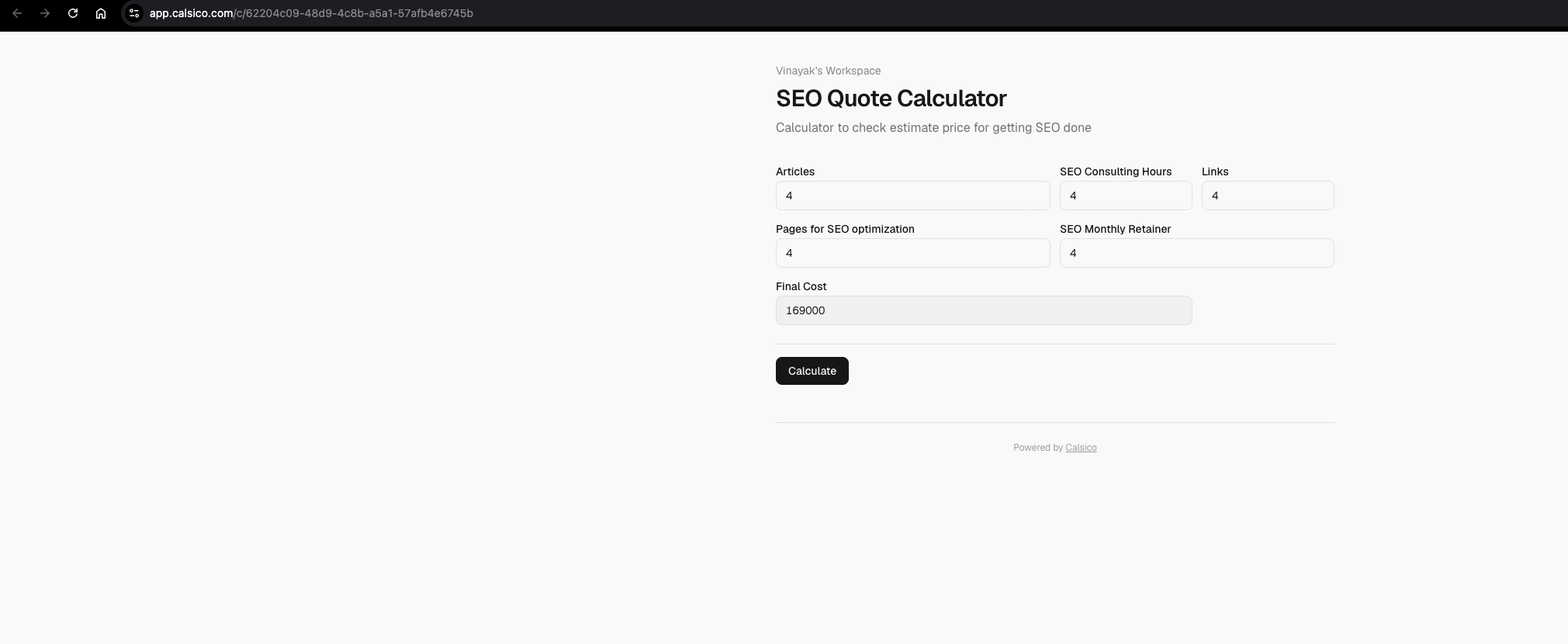
Instead of waiting for revised quotes, prospects can explore different scenarios themselves.
They instantly understand:
- What services they're interested in.
- Which package fits their budget.
- How pricing changes based on their requirements.
- Whether they're a good fit before booking a call.
By the time they speak with you, they're no longer asking for a ballpark estimate. They're discussing timelines, deliverables, and next steps.
Let Prospects Qualify Themselves
The biggest advantage of interactive pricing isn't convenience—it's qualification.
Instead of:
Visitor → Contact Form → Discovery Call → Pricing Discussion → Quote Revision
Your process becomes:
Visitor → Interactive Pricing → Understands Investment → Books a Call → Strategy Discussion → Close Faster
The prospects booking meetings are significantly more informed.
They're not asking:
"Can you give me a ballpark estimate?"
They're asking:
"We're interested in the six-month package with 100 keywords and weekly content. When can we get started?"
That's a very different conversation.
Your Spreadsheet Already Knows the Answer
Ironically, most agencies have already solved the hardest problem.
They've spent years building pricing models inside spreadsheets.
Those spreadsheets already understand things like:
- Keyword tiers
- Campaign durations
- Content costs
- Add-on services
- Discounts
- Margins
- Custom pricing rules
The business logic already exists.
You don't need to rebuild it in another tool.
You don't need developers to create a custom pricing calculator.
And you don't need to rewrite years of pricing logic every time your services evolve.
Your spreadsheet already knows how to calculate the right answer.
The problem isn't the spreadsheet. It's that only your team can use it.
Turn Your Pricing Process Into a Sales Asset
Interactive pricing isn't just useful on your website.
It can be used as:
- A self-serve pricing estimator for inbound leads
- An interactive proposal during sales calls
- A pricing configurator inside client presentations
- A qualification tool before discovery meetings
- A shareable quote clients can revisit anytime
Instead of sending multiple PDF revisions, you send a link.
Instead of waiting for your team to update pricing, prospects can explore different scenarios themselves.
Instead of answering "What if?" over email, the answer appears instantly.
Faster Answers Create Faster Sales Cycles
Every additional email, meeting, or proposal revision introduces friction into the buying process.
Prospects don't stop buying because changing 50 keywords to 100 keywords is difficult.
They stop because momentum disappears.
The faster someone understands:
- What they need
- What it costs
- Whether you're the right fit
The faster they're able to make a decision.
Sometimes, accelerating a sales cycle isn't about adding more meetings. It's about removing the unnecessary ones.
Your Spreadsheet Shouldn't Live Behind a Sales Call
For years, agencies have been told they need to move beyond spreadsheets.
The reality is that spreadsheets already power some of the most important parts of their businesses. Pricing models, retainers, forecasting, commissions, and proposals are all living there today.
They're not something that needs replacing.
They're business logic worth publishing.
At Calsico, we believe your spreadsheet shouldn't live behind a sales call. If it already knows how to price your services, it should be able to help qualify leads, answer pricing questions, and accelerate conversations before you ever join the meeting.
The faster prospects get answers, the faster they become customers.